
Metal building contractors in Bexar County, Texas
Outside the city limits in Bexar County, the Fire Marshal Office decides when a building permit is required for a structure that is not for single-family dwelling use, and that permit covers site clearing as well as construction. Inside San Antonio, Development Services reviews the plans instead.
Read the rest
Bexar is the one county here where a county permit, a city plan review, an extraterritorial jurisdiction stamp, a $50 floodplain review and an Edwards Aquifer plan can all land on one lot.
- Sheet
- County
- Jurisdiction
- Bexar County, TX
- Reviewed
- 2026-09-13
- Sources
- 28 primary sources
Ready to build? An independent local contractor who works your county prices the building. The estimate costs you nothing, now or later, whatever you decide.
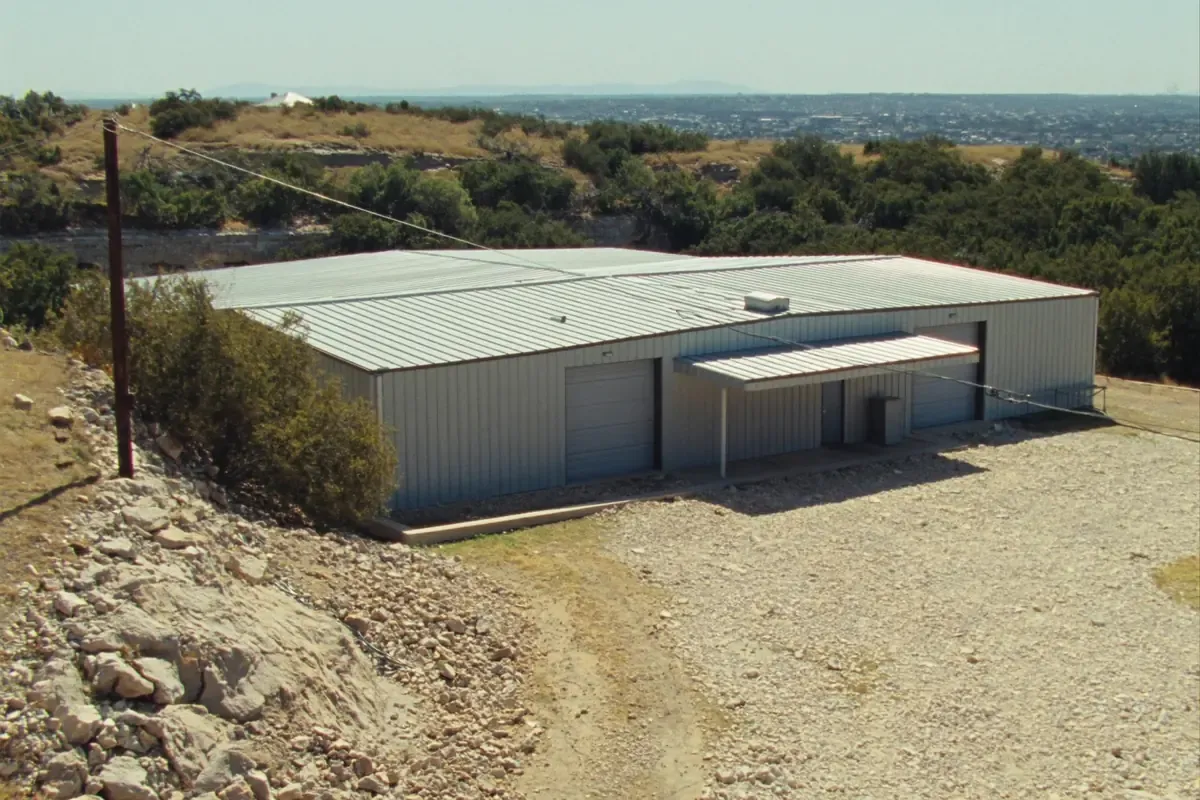
Who permits a metal building in Bexar County?
The Fire Marshal Office, once the lot is outside every city line. That office at 210-335-0300 determines when building permits are required for structures that are not for single-family dwelling use, and the county counts a single-family dwelling as a single structure of three or fewer residential dwelling units. The permit covers site clearing as well as construction. Commissioners Court adopted the 2021 International Fire and Building Codes effective January 1, 2024, so documents in the unincorporated county meet those editions.
The county pages state no county building permit requirement for a one-to-three-unit dwelling. That is what the county publishes, not a finding that a house-lot building is unregulated, and it does not settle where a detached shop falls. The Fire Marshal Office decides that one. The order at the counter is fixed (Bexar County Fire Marshal, Permits and Applications, read 2026-09-13):
Bexar County Public Works signs a building permit authorization first and emails it to the Fire Marshal once all criteria are met, 210-335-6700.
The applicant completes the Permit Verification Form, which is the first two pages of the Fire Marshal building permit form. There is no fee for reviewing and processing it.
The Fire Marshal takes the application in person and by appointment only, at 9810 Southton Rd. in San Antonio, scheduled on 210-335-0300, option 2.
Source: Bexar County, building permits and fire marshal code enforcement pages, read 2026-09-13.
Source: Bexar County Fire Marshal, code enforcement and inspections, read 2026-09-13.
What does the county permit cost and how long does it take?
The county has 30 days to issue or deny, and the permit is valid 180 days. Pin the valuation down before anything else: the Fire Marshal fee schedule estimates commercial construction at $200.00 per square foot while the county Code Enforcement page states $25.00, and valuation drives every fee. What the schedule dated January 1, 2024 charges (Bexar County Fire Marshal fee schedule and Code Enforcement pages, read 2026-09-13):
A flat $400.00 building permit fee for a commercial or public access project valued under $6,250.00.
A plans review fee, $100.00 minimum.
$200.00 for final inspection and certificate of occupancy.
A 4.5 percent technology surcharge on top.
Source: Bexar County, building permits and fire marshal code enforcement pages, read 2026-09-13.
What is different inside the cities?
Inside San Antonio the city reviews the plans, and the clock runs on occupancy and size. Commercial work goes through Development Services, with a completeness review of up to three business days. A business or mercantile project of 7,999 square feet and under gets eight business days of initial technical review; at 8,000 square feet or over it is 18 calendar days, and assembly, education, factory, high hazard, institution, storage and utility occupancies are complex at any size. The city sets the permit valuation itself and requires structural sheets stamped by a Texas professional engineer. It reviews no accessibility sheets: over $50,000 that goes to the state. City against county is on the San Antonio and Bexar County permit guide.
Helotes, Converse, Live Oak, Universal City, Selma and Leon Valley are incorporated too, and a lot inside any of them runs on that city, not the county. Only the San Antonio pages were read here, so confirm the rest at their own city hall.
Source: City of San Antonio Development Services, business and commercial projects, read 2026-09-13.
Source: City of San Antonio Development Services, commercial project application guide, read 2026-09-13.
Source: City of San Antonio Development Services, FY 2026 development fee schedule, read 2026-09-13.
Does the city reach a lot outside its limits?
Not with a building permit, and yes with paperwork. Local Government Code 212.049 states that the development plat subchapter does not authorize a municipality to require municipal building permits or otherwise enforce its building code in its extraterritorial jurisdiction, which reaches up to five miles out from a city of 100,000 or more. A city that has adopted that subchapter can still hold up the job another way: section 212.046 bars a municipality, a county or an official of another governmental entity from issuing a building permit or any other development permit on a covered tract until a development plat is filed with and approved by the municipality. Bexar County Public Works adds that a property inside the City of San Antonio extraterritorial jurisdiction needs a city Storm Water Review stamp on the Permit Verification Form and site plan, and that tree, irrigation and signage permits come from the city holding that jurisdiction. Inside San Antonio a tree application comes before any development, with a commercial tree permit at $175.00 per acre. The city tree pages say nothing about whether that reaches the extraterritorial jurisdiction, so ask first.
Source: Texas Legislature Online, Local Government Code Chapter 212, municipal regulation of subdivisions and property development, read 2026-09-13.
Source: Texas Legislature Online, Local Government Code Chapters 42 and 212, read 2026-09-13.
Source: Bexar County, building permits, read 2026-09-13.
Source: City of San Antonio Development Services, tree preservation, read 2026-09-13.
Source: City of San Antonio Development Services, FY 2026 development fee schedule, read 2026-09-13.
Does a Bexar County site need an Edwards Aquifer plan?
Where the site sits on a regulated zone, yes, and the approval comes before the dirt work. TCEQ requires an approved Edwards Aquifer protection plan before construction begins on the recharge, transition or contributing zone, and its San Antonio region pages name Bexar, Medina, Comal, Uvalde and Kinney counties. Only portions are regulated, so TCEQ points to its own map viewer to settle a parcel, and on the recharge zone the regulated activities include clearing and excavation, not just the building. The zones, the fees by acreage and the review clock are on the Edwards Aquifer plan guide.
Source: Texas Commission on Environmental Quality, Edwards Aquifer Protection Program, read 2026-09-13.
Source: Texas Commission on Environmental Quality, Edwards Aquifer Protection Program, what plans you might need, read 2026-09-13.
Floodplain, stormwater and the way in off the road
Into a floodplain review first, at $50 per activity. Bexar County Public Works must review all construction activities on property in proximity to the 100-year floodplain, and a flood study by a professional engineer may be required. Clearing, fill, excavation, driveways, culverts, parking lots, septic and utilities are triggers, and stormwater and floodplain permits are filed at least 45 days before the Permit Verification Form. One acre or more of disturbance also needs TCEQ construction general permit coverage, and the county adds a $500 storm water quality permit (Bexar County Public Works Permits Verification Guidelines, read 2026-09-13).
The driveway is its own permit. Bexar County Public Works controls county-maintained rights of way and publishes $35 per driveway (Right-of-Way Permits, read 2026-09-13); onto a state highway it goes to the TxDOT San Antonio District, 210-615-1110, on Form 1058.
Source: Bexar County, Floodplain Development Permits, read 2026-09-13.
Source: Texas Commission on Environmental Quality, construction stormwater general permit TXR150000, read 2026-09-13.
Source: Texas Department of Transportation, access management manual, driveway permits, read 2026-09-13.
Source: Texas Department of Transportation, San Antonio District, read 2026-09-13.
What does the ground do to a slab in Bexar County?
It depends which third of the county the lot sits in. The USDA soil survey of Bexar County, Texas (1966), read 2026-09-13, describes the north as shallow or very shallow stony soil over Glen Rose and Edwards limestone, with Tarrant soils a clayey layer a few inches to about 10 inches thick over hard, fractured rock. East and west the uplands are the opposite: the Houston Black-Houston association is deep, slowly permeable clay that opens wide cracks as it dries. South and southwest it turns to loamy sand, and the far southern tip to loose Carrizo sand.
That means a soil report and an engineered foundation plan for the tract, not a detail copied off the last job. Occupations Code 1001.056 exempts a single-story building of not more than 5,000 square feet with no clear span over 24 feet on the narrow side, and longer spans still need engineered roof supporting members. Sizing it is on the slab and foundation guide.
Source: Texas Legislature Online, Occupations Code Chapter 1001, engineers and engineering, read 2026-09-13.
Septic, water and power on a lot with none of it
Septic is a county permit here. Every on-site sewage facility in Bexar County must be permitted: a new system, a repair, a renewal, or an existing system found without one (Bexar County Environmental Services, On-Site Sewage Facilities, read 2026-09-13). On the TCEQ record the county agent covers the whole county except four incorporated places, and does not say who permits inside those four, so a city address is confirmed with that city. A professional engineer or sanitarian must seal the planning materials for new construction in the Edwards Aquifer recharge zone, and the rules count any building that is not a single-family dwelling or duplex as commercial. The order for a bare lot is on the septic, water and electric guide.
Source: Texas Commission on Environmental Quality, On-Site Activity Reporting System, authorized agent search by county, records read for Bexar, Medina, Wilson, Atascosa, Guadalupe, Karnes and Frio, read 2026-09-13.
Source: Texas Commission on Environmental Quality publication RG-472, on-site sewage facility rules compilation, read 2026-09-13.
What metal building contractors in Bexar County need settled first
Four answers set the path and the price: which side of the city line the lot sits on, whether it is inside the San Antonio extraterritorial jurisdiction, whether it sits on a regulated Edwards Aquifer zone or near the 100-year floodplain, and the footprint and clear span. At $50,000 or more of estimated construction cost the project is also registered with the Texas Department of Licensing and Regulation and reviewed by a registered accessibility specialist, whatever the local office does. TDLR states that those rules and the Texas Accessibility Standards are relevant to public and commercial buildings and do not apply to private residences, and the standards set the limit on that: where a commercial facility or a public accommodation sits inside a private residence, the portions used in operating the business are covered and the portion used only as a residence is not.
Texas licenses no home builder and no general contractor, so there is no state builder license to check here. The work is done by an independent local metal building contractor who works Bexar County. Rules next door do not carry over: Medina County publishes no county building permit, Wilson County its own stack. The path in order is on building a metal building in San Antonio, and two of the nine building sheets are commercial metal buildings and metal shops and workshops.
Source: Texas Department of Licensing and Regulation, Architectural Barriers frequently asked questions, read 2026-09-13.
Source: Texas Department of Licensing and Regulation, elimination of architectural barriers at a glance, read 2026-09-13.
Source: Texas Department of Licensing and Regulation, 2012 Texas Accessibility Standards, scoping requirements, read 2026-09-13.
Source: Sunset Advisory Commission, Texas Residential Construction Commission; TDLR regulated industries list, read 2026-09-13.