
What site prep does a metal building pad need in the San Antonio area?
Clearing, a compacted pad that sheds water, and the permits that reach the dirt before the steel shows up. In unincorporated Bexar County the Fire Marshal building permit reaches site clearing, not just the build.
One disturbed acre brings in TCEQ stormwater coverage. On the Edwards Aquifer recharge zone, clearing counts as a regulated activity by itself. And inside San Antonio, a tree application goes in before any development of the property.
Lot picked out? Each request goes to one independent contractor, whose call it is which jobs to accept.
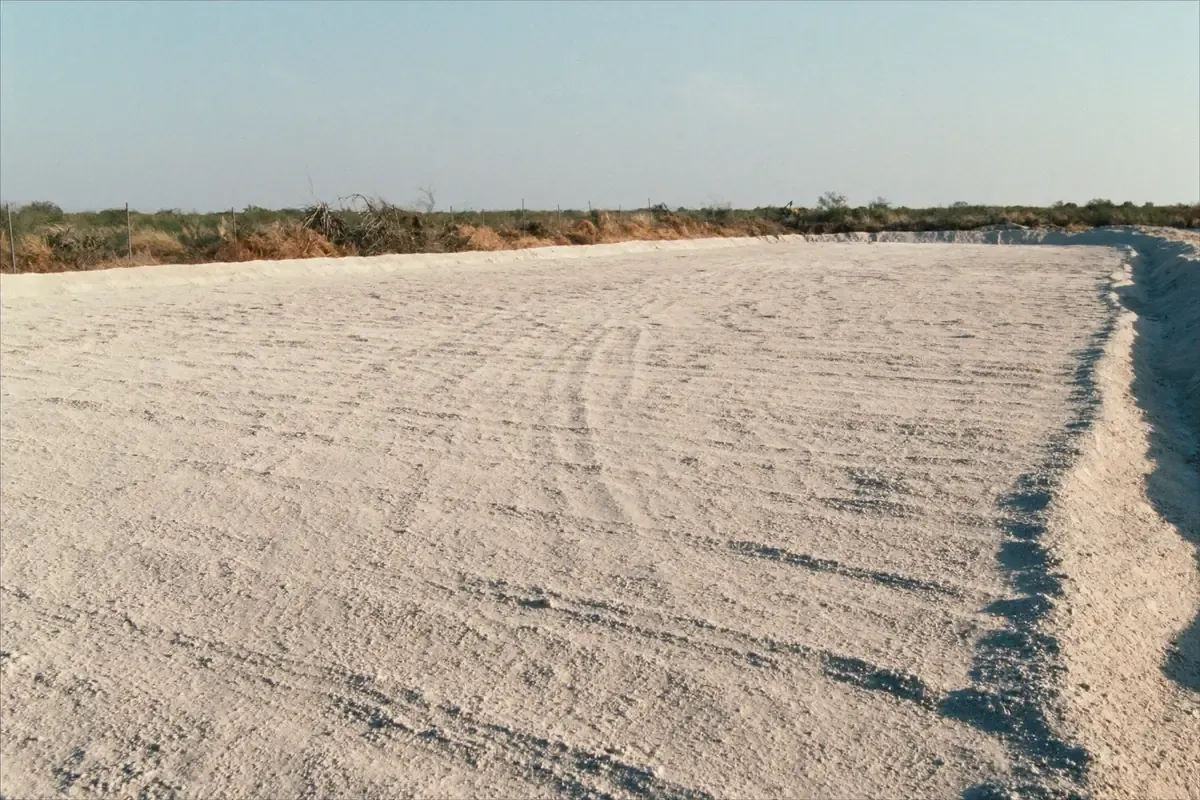
What happens on the lot before the slab
Four steps, in order: permission to disturb the ground, clearing, earthwork that lifts the finished floor above the water crossing the lot, and a pad the slab can sit on. Order matters because several permits here reach the clearing and grading, not just the building. In unincorporated Bexar County the Fire Marshal permit reaches site clearing, construction, renovation and a change of occupancy.
The building sets the pad, so fix the footprint, the doors and the finished floor elevation first. Moving a pad once it is cut is a second dirt job, and a commercial steel building with parking and a truck entrance takes up much more of the lot than a shop. This sheet gives no pad thickness and no fill quantity; those come off a survey and a soil report for your tract.
Checked at Bexar County, building permits and fire marshal code enforcement pages, 2026-09-13.
Permits before the dozer, county by county
In unincorporated Bexar County, yes, and clearing rides inside the building permit. The seven county sites, checked 2026-09-13:
| County | What it posts | Who to call |
|---|---|---|
| Bexar | The Fire Marshal Office decides when structures or areas not for single-family dwelling use need building permits, and that permit reaches site clearing. Public Works also lists a $500 storm water quality permit where an acre or more of soil is disturbed, and a $50 or $250 post construction permit on the same trigger. | Public Works, 210-335-6700 |
| Guadalupe | A $500.00 site preparation and foundation permit on the Fire Marshal fee schedule effective February 1, 2026, separate from the building permit the county requires before anyone builds or substantially improves a commercial establishment or public building outside a city. | Fire Marshal Office, 830-303-8856 |
| Wilson | A $100 development permit per application, and a drainage study once the development footprint is three acres or more. No page checked names a county building permit for a commercial structure. | Permitting and Development, 830-393-8357 |
| Atascosa | A building permit outside city limits before a new commercial or public building, issued by the Fire Marshal after plan review. The county document checked does not list clearing or grading as permitted work of its own. | Fire Marshal, 830-769-2029 |
| Medina, Karnes, Frio | No county building permit for a commercial structure and no clearing or grading permit on any page checked. That describes their sites; it is not a green light to move dirt without asking. | Medina County, 830-741-6000; Karnes Special Projects and Permits, 830-780-3511; Frio Road and Bridge, 830-505-7402 |
Checked at Bexar County, building permits and fire marshal code enforcement pages, 2026-09-13.
Clearing a San Antonio lot with trees on it
Inside the city, a tree application goes in before any development of the property, so it is a site-prep step, not a building step. If the work takes out trees or disturbs vegetation, a tree preservation plan goes with it under Unified Development Code section 35-523; if the site has no protected trees, a tree affidavit takes its place. A commercial tree permit is $201.25 plus a $25.00 tree canopy fee, the plan review is $115.00, and starting site work without the permit brings a penalty fee.
Past the city limits but inside a city extraterritorial jurisdiction, the tree paperwork still comes from a city. Bexar County Public Works says tree, irrigation and signage permits come from the city whose extraterritorial jurisdiction the property sits in, and that a property in the San Antonio extraterritorial jurisdiction needs a City of San Antonio Storm Water Review stamp on the Permit Verification Form and the site plan. The city tree pages are silent on whether the tree rules themselves reach out there, so make the call instead of assuming.
Checked at City of San Antonio Development Services, tree preservation, 2026-09-13.
Checked at City of San Antonio Development Services, FY 2027 development fee schedule, 2026-10-03.
Checked at Bexar County, building permits, 2026-09-13.
The pad has three jobs
All three are about water and movement, not the building.
Height. Set the finished floor high enough that sheet flow across the lot runs past the building, not in at the door. Where floodplain touches the tract, the county floodplain office decides what the elevation has to meet.
Bearing. Compact the cut and fill to what the engineered foundation plan calls for, and carry the pad past the building line so the slab edge is not riding the shoulder of the fill.
Drainage. Slope the ground away from the slab on every side. A metal roof dumps water fast and in volume, so where it lands belongs in the grading plan, not in a shovel job afterward.
What the machines dig into
One of three kinds of ground, and it can change inside one county. Sorted by what each does to a pad, from each county's own published survey, checked 2026-09-13:
Rock close to the surface. North Bexar County: a few inches to about 10 inches of clayey surface over hard, fractured limestone (Soil Survey of Bexar County, 1966). North Medina County: shallow soils over layered limestone and marl, with caliche dug in places for road material (Medina County, 1977). Atascosa County: Hindes soils formed over caliche beds (Atascosa County, 1980). Limestone within 40 inches of the surface across part of Karnes County, and Frio County loam with limestone under it (Handbook of Texas Online, an encyclopedia entry, not a primary survey).
Shrink-swell clay. The east and west uplands of Bexar County are deep, slowly permeable clay that cracks wide when it dries (1966). Close to half of Guadalupe County is deep clay, and the survey rates one association, about 22 percent of the county, very high for shrink-swell (1977). Atascosa County's biggest soil unit lists shrinking and swelling, corrosivity to uncoated steel and low soil strength as its main limits (1980), and one Wilson County association lists shrink-swell and corrosivity to uncoated steel pipe (1977).
Sand. South Bexar County is sand over clay (1966). About 20 percent of Wilson County is a sand belt, with no hard limestone shelf under the county at all (1977). About 13 percent of Guadalupe County is sandhills (1977), and about 17 percent of Atascosa County is sandy soil with permeability anywhere from moderately slow to rapid (1980).
How that ground changes the pad
It pushes cost two opposite ways, and a few miles decide which. Shrink-swell clay moves with moisture, which makes drainage away from the slab a structural matter, not a cosmetic one. Rock and caliche at pad depth go the other way: cutting turns into breaking. Both are foundation questions as much as pad questions, and they get designed together on the slab and foundation sheet.
Earthwork and the stormwater permit
It starts at one disturbed acre. Work disturbing an acre or more of soil, with stormwater running to surface water in the state, needs coverage under the TCEQ construction general permit, and the stormwater pollution prevention plan must be in place before construction starts. The count is disturbed soil, not building footprint: a shop well under an acre, with a long drive, a laydown yard and a parking pad, can cross the line without the building growing an inch.
| Disturbed soil | Filing |
|---|---|
| Five acres or more (large) | Notice of Intent through STEERS before work begins, $225 online or $325 on paper; Notice of Termination within 30 days of final stabilization |
| One acre to under five (small) | No Notice of Intent; signed small construction site notice posted, with a copy to the storm sewer operator at least two days before work begins |
| Under one acre, off any wider common plan of development or sale | Outside the permit |
Checked at Texas Commission on Environmental Quality, construction stormwater general permit TXR150000, 2026-09-13.
Checked at Texas Commission on Environmental Quality, general permit TXR150000, fees, 2026-09-13.
Clearing on the Edwards Aquifer recharge zone
On the recharge zone, clearing is regulated, and for a lot in Bexar or Medina County that is the biggest line on this sheet. On the recharge, transition or contributing zone, construction cannot start until TCEQ approves an Edwards Aquifer protection plan, and for the San Antonio region its program pages list Bexar, Medina, Comal, Uvalde and Kinney counties.
On the recharge zone, nothing regulated happens without an approved water pollution abatement plan, and TCEQ lists clearing and digging next to putting up buildings, roads and utility stations and anything else that changes the lay of the ground, its geology or how it takes in recharge. The contributing zone has its own plan, needed only when the work disturbs five acres or more or the lot belongs to a wider plan for development or sale. Stormwater coverage does not free the ground: the general permit bars work on a regulated site until the plan is approved.
Several private-residence cases turn on impervious cover, and TCEQ counts a concrete pad and a driveway in it along with rooftops, sheds and sidewalks. So the apron and parking around a home-lot metal shop building over the recharge zone are a permit question, not just a budget one. Only parts of the aquifer are regulated, and TCEQ sends you to its own map viewer to see whether a lot sits over one. Do that lookup before any dirt bid means anything.
Checked at Texas Commission on Environmental Quality, Edwards Aquifer Protection Program, 2026-09-13.
Checked at Texas Commission on Environmental Quality, Edwards Aquifer Protection Program, what plans you might need, 2026-09-13.
Checked at Texas Commission on Environmental Quality, general permit TXR150000, part II, 2026-09-13.
Checked at Texas Commission on Environmental Quality, Edwards Aquifer private residences, 2026-09-13.
Floodplain rules reach the grading too
Most of these counties write filling and grading into their own definition of development. Bexar County Public Works reviews every construction activity on property near the 100-year floodplain, may ask for a flood study by a professional engineer, charges $50 per activity, and lists clearing and grading, fill, excavation, a driveway, culverts, drainage structures, a parking lot, septic and utilities among the triggers on its application. The other six, checked at each county site on 2026-09-13:
Medina County: a permit for any man-made change to real estate in the floodplain, listing filling, grading, paving and storage of materials. Environmental Health, 830-741-6195.
Wilson County: $100.00 for a determination, $300.00 inside a Special Flood Hazard Area, $500.00 for a drainage review and $200.00 for an elevation certificate review where either applies. Permitting and Development, 830-393-8357.
Guadalupe County: development covers filling, grading, paving, excavation and drilling, on a five-step process that ends with a certificate of compliance. Environmental Health, 830-303-8858.
Atascosa County: the Emergency Management Coordinator serves as Floodplain Administrator, and the fee schedule charges $200 for a commercial floodplain permit against $25 residential. 830-769-3093.
Karnes County: a floodplain development permit appears in the subdivision and development rules approved May 30, 2013, with no page of its own, no fee and no administrator named, and floodplain questions go through the county development permit application. 830-780-3511.
Frio County: its Flood Damage Prevention Ordinance, dated May 23, 2016, requires a permit for all development in the community, and the application covers non-residential structures by name. 830-326-3281.
Checked at Bexar County, Floodplain Development Permits, 2026-09-13.
The drive is part of the same dirt job
Same dirt, same machines, a different permit desk. Bexar County Public Works controls all construction in county-maintained rights of way, driveways onto county roads included, and charges $35 per driveway for a driveway or a driveway with flatwork, with standard details drawn both with and without a culvert pipe. Checked at the Bexar County Right-of-Way Permits page, 2026-09-13. The other counties, and TxDOT on a state highway, each handle access their own way; that is the driveway access sheet. Settle access before cutting the pad, since the concrete trucks, the crane and the steel delivery all cross that ground first.
What site prep costs
Only the permits carry posted prices, and two counties price the earthwork permit directly. Guadalupe County charges $500.00 for a site preparation and foundation permit, effective February 1, 2026. The Bexar County Fire Marshal fee schedule dated January 1, 2024 charges $500.00 for a foundation permit and at least $100.00 for plans review, plus a 4.5 percent technology improvement surcharge. Wilson County charges $100 per development permit application. Checked at each county fee document, 2026-09-13.
No metal building company serving the San Antonio area posts a price for the dirt work either, so a number found online was written for someone else's ground. Five answers narrow it down: the acreage, whether it has trees, whether it sits in the floodplain, whether it sits over a regulated aquifer zone, and where the road frontage is. The full sequence: the start-to-finish San Antonio guide.
Company price pages checked; none shows a figure. Checked at Four San Antonio-area metal building company websites, 2026-09-13.
Handing the pad over to the slab crew
Finish the pad, check it against the survey and accept it before any forms go down, because the anchor bolt layout, the column loads and the edge detail all assume the pad sits where the drawing says and carries what the drawing says. Two scopes meet at that line, and the seam is where money leaks. Put the split in writing before either starts: who clears, who hauls off, who brings and compacts fill, who sets pad elevation, who pays which permit fee, who calls which inspection, and who eats the cost if rock turns up at grade.
Who does the site work
Clearing, earthwork and concrete are contractor scope. The survey comes from the surveyor and the soil report from the geotechnical lab. A Texas professional engineer seals the foundation plan, which is also the city rule inside San Antonio: every structural sheet, foundation and structural framing, has to be designed and stamped by one.
Texas licenses no builder, so the credential on this sheet is the engineer's seal on the foundation plan. One independent metal building contractor coordinates the site work and prices it. For any pad, ask for four papers: the survey, the soil report, the engineered foundation plan, and a written estimate that breaks out the earthwork line by line. The rest of the county permit list, for Bexar County, TX and the six counties around it, is its own sheet.
Checked at City of San Antonio Development Services, commercial project application guide, 2026-09-13.
Checked at Sunset Advisory Commission, Texas Residential Construction Commission; TDLR regulated industries list, 2026-09-13.
What owners ask
What does site prep for a metal building pad involve around San Antonio?
Clearing; earthwork that lifts the finished floor above the water crossing the lot; a pad compacted to what the engineered foundation plan calls for; ground sloping away from the slab on every side; and the permits that reach the dirt. In unincorporated Bexar County the Fire Marshal building permit reaches site clearing as well as the build. Inside San Antonio a tree application goes in before any development of the property. Work disturbing an acre or more of soil needs TCEQ construction stormwater coverage. On the Edwards Aquifer recharge zone, clearing is regulated and needs an approved protection plan first. Checked at the Bexar County, City of San Antonio and TCEQ pages, 2026-09-13.
Is a permit needed to clear a lot in Bexar County, TX?
Outside the cities, the Bexar County Fire Marshal Office at 210-335-0300 decides when structures or areas not for single-family dwelling use need building permits, and that permit reaches site clearing, construction, renovation and a change of occupancy. a Building Permit Authorization from Public Works must be completed, signed and approved first; applications go in person, by appointment only; the county gets 30 days to issue or deny; the permit then runs 180 days from issue. Inside the City of San Antonio or any other city, that city's rules apply. Checked at the Bexar County building permits and fire marshal pages, 2026-09-13.
When does grading a pad need a Texas stormwater permit?
Once the work disturbs an acre or more of soil and stormwater runs to surface water in the state, it needs coverage under the TCEQ construction general permit, with a stormwater pollution prevention plan in place before construction starts. Five acres or more: the primary operator puts in a Notice of Intent through STEERS before work begins, $225 online or $325 on paper, and a Notice of Termination within 30 days of final stabilization. From one acre to under five there is no Notice of Intent: a signed small construction site notice is posted, with a copy to the storm sewer operator at least two days before work begins. Under an acre, off any wider common plan of development or sale, the permit does not apply. Checked at the TCEQ construction stormwater pages, 2026-09-13.
Must clearing on the Edwards Aquifer recharge zone wait for approval?
Yes. On the recharge, transition or contributing zone, construction cannot start until TCEQ approves an Edwards Aquifer protection plan, and for the San Antonio region its program pages list Bexar, Medina, Comal, Uvalde and Kinney counties. On the recharge zone, nothing regulated happens without an approved water pollution abatement plan, and TCEQ lists clearing and digging next to putting up buildings, utility stations, roads, highways and railroads. Stormwater coverage does not take its place: the general permit bars work on an Edwards-regulated site until the plan is approved. Only parts of the aquifer are regulated, and TCEQ sends you to its own map viewer to see whether a given lot sits over one. Checked at the TCEQ Edwards Aquifer Protection Program pages, 2026-09-13.